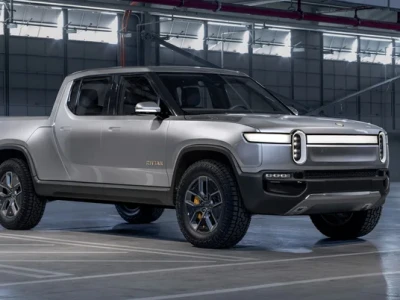
Rivian's Q3 Surprise: Not Just a Win, But a Glimpse of the Future of Sustainable Growth
Okay, folks, let's dive into Rivian's Q3 earnings. Yeah, yeah, I know, earnings reports can be snoozefests, but trust me, this one's different. It's not just about the numbers; it's about what those numbers mean for the future of EVs and sustainable business models. Rivian didn't just beat Wall Street's expectations; they offered a blueprint for how to build a resilient and profitable EV company in a challenging market.
So, what happened? Well, Rivian reported a second quarterly gross profit this year! That’s right, profit. And not just a sliver of profit, but a real, tangible $24 million, beating estimates that expected a $38.6 million loss. The stock jumped over 3% in after-hours trading. This is the kind of news that reminds me why I got into this field in the first place.
What’s even more exciting is how they did it. It wasn't just about selling more cars (though they did deliver a solid 13,201 vehicles, up 32% year-over-year). It was about diversifying their revenue streams. Rivian's joint venture with Volkswagen is clearly paying off, but more importantly, their software and services business is starting to flex its muscles. Think of it like this: it's not just about selling the razor; it's about selling the blades, the shaving cream, and the whole darn grooming experience! It’s about creating an ecosystem where value is generated at every touchpoint.
And let’s be real, the EV market is tough right now. We’ve seen analysts downgrading Rivian stock, citing concerns about demand and the end of EV tax credits. Mizuho analyst Vijay Rakesh, for example, downgraded Rivian from Hold to Sell, citing a “subdued 2026 EV sales outlook.” But here’s the thing: Rivian is showing that they’re not just relying on tax credits and hype. They’re building a sustainable business, brick by brick. This is what I like to see.
The Big Picture: Resilience in the Face of Uncertainty
Rivian's success hinges on more than just clever accounting. It's about building a resilient business model. They're not just an automaker; they're a technology company, a software provider, and a service provider, all rolled into one. That kind of diversification is crucial in a rapidly changing market. What happens when autonomous driving becomes the norm? Or when battery technology takes another leap forward? Rivian is positioning itself to adapt and thrive, no matter what the future holds.
The $130 million loss in automotive operations, while significant, was offset by the $154 million from the VW joint venture and software/services. That's a crucial point. It’s like a diversified investment portfolio; when one sector dips, another can pick up the slack.
And let's not forget the leadership. Rivian CEO RJ Scaringe, in the shareholder letter, acknowledged the "near-term uncertainty from trade, tariffs, and regulatory policy." But he also emphasized the focus on "long-term growth and value creation." That kind of long-term vision is essential for any company looking to disrupt an industry.
But with this growth comes responsibility. As Rivian expands its software and services offerings, it's crucial that they prioritize data privacy and cybersecurity. The more integrated these systems become, the more vulnerable they are to potential threats. It's a challenge, but it's one that Rivian must address head-on.
Think about the early days of the internet. People were skeptical, unsure of its potential. But the companies that embraced it, that saw the big picture, are now the giants of the digital age. Rivian has the potential to be one of those companies, a leader in the sustainable transportation revolution. The speed of this is just staggering—it means the gap between today and tomorrow is closing faster than we can even comprehend.
Rivian's Not Just Surviving, It's Evolving
Rivian's Q3 earnings weren't just a win; they were a sign that the company is evolving, adapting, and building a sustainable future. They're not just selling electric vehicles; they're building an ecosystem of value. And that, my friends, is something to be excited about.
Imagine what Rivian could achieve in the next five years. With continued innovation, strategic partnerships, and a relentless focus on customer experience, they could become the de facto standard for sustainable transportation. It's a bold vision, but it's one that I believe is within their reach.
And frankly, when I look at the comments from everyday investors I see on Reddit, I see a lot of people who agree with me. There's a groundswell of support for Rivian, a sense that this company is building something special.