The Invisible Threads: How Cross-Border Digital Connections Are Weaving Our Future
You know, sometimes, we get so caught up in the headlines, the daily grind, the immediate challenges, that we miss the bigger picture, the seismic shifts happening right under our noses. But if you zoom out a little, if you really look, you'll see something truly profound emerging: our world is shrinking, not in a bad way, but in a way that’s knitting us closer together, creating an intricate tapestry of cross-border connections. And what’s fascinating is how these connections are being forged – sometimes by pure human necessity, sometimes by a visionary academic leap, and often, by the sheer, unbridled power of digital innovation.
Think about it. We often talk about borders as these hard, unyielding lines on a map. But what happens when life, love, and ambition simply refuse to acknowledge them? Take Sania Mirza, for instance. A global icon, a former doubles world No. 1, she recently opened up about the "daunting" reality of single, cross-border parenting. Leaving her son, Izhaan, in Dubai when work calls her to India? That's not just a logistical puzzle; it’s an emotional tightrope walk. Karan Johar, a pretty smart guy himself, nailed it when he called her situation "more daunting and overwhelming" because of its cross-border nature. It really makes you pause, doesn't it? What kind of support systems do we need to build for the globally mobile, digitally connected, and often physically separated families of tomorrow? It’s a question that cuts right to the heart of what it means to be human in an increasingly international landscape. We can build incredible tech, but how do we leverage it to cradle the human spirit, to make these personal sacrifices a little less heavy? Sania Mirza opens up on cross-border parenting after divorce with Shoaib Malik, skips dinners to avoid loneliness | Tennis News - Hindustan Times
The New Architecture of Global Collaboration
But it’s not just personal lives that are stretching beyond geographical confines. The very institutions that shape our future, like universities, are reimagining themselves. We just saw this incredible announcement: Queen's University Belfast (QUB) and Dundalk Institute of Technology (DKIT) are collaborating across the Irish border, effectively making DKIT a "university college" whose students will earn degrees from QUB. This isn't just a memo; it's a blueprint for a new kind of academic ecosystem. Imagine the ripple effect! Students in the north-east region get increased accessibility, more funding, and expanded opportunities. Irish Economy Minister Caoimhe Archibald isn't wrong when she says it will "expand opportunities" for students and researchers. And the Irish Minister for Further and Higher Education, James Lawless, called it a "major step forward in creating the first ever all-island university." When I first read about this, I honestly just sat back in my chair, speechless. This isn't just an administrative merger; it's a symbolic dismantling of educational barriers, a powerful statement that knowledge knows no borders. It reminds me of the early days of the internet, when suddenly, information wasn't confined to libraries or national archives; it was everywhere, accessible to anyone with a connection. This QUB-DKIT initiative is doing something similar for higher education, building a digital bridge for the minds of the future. What other academic silos are just waiting for a similar cross-border, collaborative explosion? Dundalk Institute of Technology and Queen's University Belfast in new cross-border collaboration - BBC
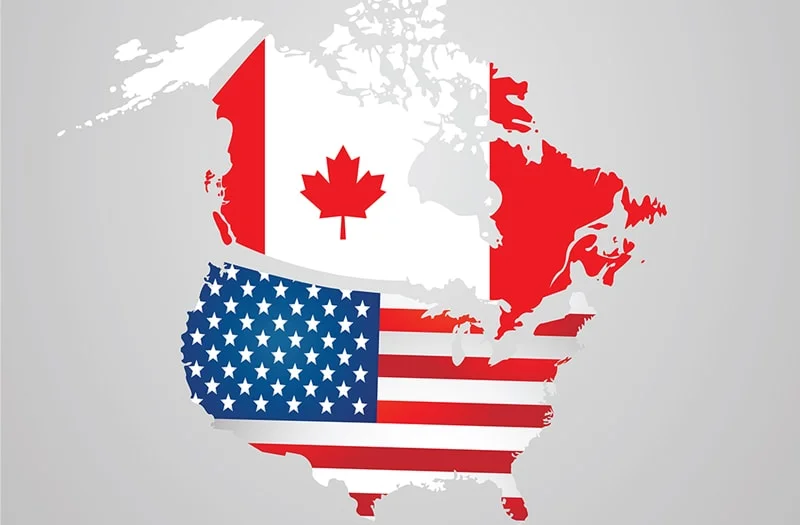
And then, there’s the sheer engine of global commerce, racing ahead with its own cross-border innovations. Just look at the recent strategic cooperation agreement between Autozi Internet Technology (Global) Ltd. (AZI) and Wanshan International Trading Co. They're not just shaking hands; they’re building and operating a cross-border supply-chain cloud platform. This isn't some minor trade deal; this is a full-stack integration, aiming for a staggering USD 1 billion in cumulative overseas sales within three years. We're talking digital systems, logistics, after-sales support for aftermarket parts and even future SPV/EV components. Autozi, a leading Chinese automotive service platform, is executing its strategic pillars of Capitalization, Digitalization, and Globalization all at once. Analysts, usually a cautious bunch, assessed this with a "Moderate" impact and "Positive" sentiment. They noted it creates a scalable distribution channel, but rightly emphasized that execution is key. Of course, it is! But the vision here is truly something else. This isn't just moving products from point A to point B; it's about creating an entirely new neural network for global trade, a seamless, interconnected system that transcends national boundaries, making the global marketplace truly accessible in ways we only dreamed of a decade ago. It’s like the Silk Road, but instead of camels and caravans, we have data packets and algorithms, moving at light speed, redefining how china connects with the world. Autozi Internet Technology (Nasdaq: AZI) targets $1B sales with Wanshan alliance - Stock Titan
The Future is a Tapestry, Not a Wall
What we're seeing across these disparate examples – the personal, the academic, the commercial – is a profound shift towards a more interconnected global reality. It's not just about overcoming obstacles; it's about recognizing that the greatest opportunities often lie between the lines, in the spaces where cultures, economies, and ideas intersect. We're moving into an era where our biggest challenges and our most exciting breakthroughs are inherently cross-border. The tech is here, the will is often there, but it demands a new way of thinking, a willingness to build bridges where we once saw only walls. The impact on individuals, on university systems, on online commerce, is just beginning to unfold, and honestly, the sheer potential for positive transformation is almost dizzying. This isn't just about efficiency; it's about expanding human potential, creating a richer, more vibrant, and ultimately, more unified world. We must, however, remember the ethical considerations; with such power to connect comes the responsibility to protect, to ensure these digital threads don't become new vulnerabilities, but rather, strengthen the fabric of our shared human experience. This is the kind of breakthrough that reminds me why I got into this field in the first place, pushing the boundaries of what's possible and imagining the best future we can build together.